Sleep Apnea
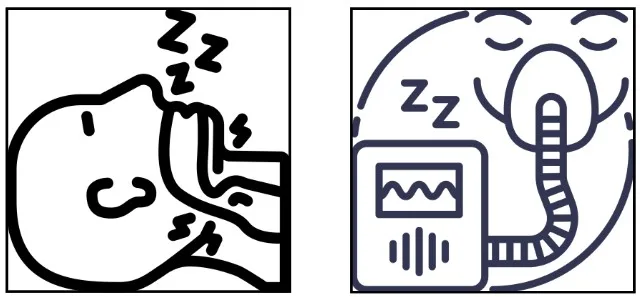
When I wake from a good night’s sleep, I feel amazing. I am refreshed, energized, and ready for the day. Some days I wake up feeling more refreshed than other days. This is natural and how we feel each morning varies for all of us. However for some folks, they do not wake up feeling refreshed. They may stop breathing (apnea) or have reduced breathing (hypopnea). If breathing stops or is reduced more than 5 times in an average hour, the individual has sleep apnea.
Sleep apnea is becoming more common in the United States. A 2024 study, Unmasking obstructive sleep apnea: Estimated prevalence and impact in the United States, suggested that 30% of all adults in the United States have mild to severe sleep apnea. Obesity is linked with increased sleep apnea risk, as is nasal congestion. While there are very few studies evaluating breathing patterns and sleep apnea, preliminary evidence suggest that breath retraining is a tool to assist with managing sleep apnea.
Does it matter if breathe with nose or mouth?
Yes. It does matter how you breathe. Your breathing habits influence your risk of sleep apena. Your breathing rhythm, your sensitivity to changes in carbon dioxide and oxygen, and your upper airway strength all influence the likelihood of having a sleep apnea event. In general, breathing through your nose is better.
You are more likely to have a sleep apnea event when you breathe through your mouth when you sleep, than when you breathe through your nose.
The above sentence is a quote from a 2020 paper, The Nose and Nasal Breathing in Sleep Apnea, published by Y.Cha, A Goldberg, J Chang. They highlight three reasons why breathing through the nose is better and will reduce your likelihood of a sleep apnea event.
Nose breathing is better because…
- upper – airway resistance is significantly lower
- upper – airway dilation is higher.
- opening your jaw makes it harder for air to flow through your airways
Trying to breathe through your nose is a good place to start and can be very helpful.
Nose Breathing is not the full story.
As more research is done on why or how an individuals’ throat collapses causing a sleep apnea event, it appears there are a variety of factors and more customized treatment approach may be helpful. Breathing can influence several of these factors. Join Nicole online to learn more about sleep apnea and breathing at a part informational, part breathing practice on Thursday, October 8, 2026, 7pm EST. Learn more and Register here.
Airway strength, respiratory control, and arousal threshold are all factors in sleep apnea.