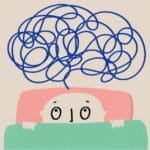
What is anxiety? Does breathing help?
Anxiety is a feeling of worry, nervousness, or unease, typically about an imminent event or something an uncertain outcome. When we feel anxious our breath isn’t relaxed and easy. We may practice interrupting anxiety by using our breath. As we become comfortable noticing our breath, we can slow down the breath. We may breathe lower into the ribs, soften the breath, and help our body break out of the anxiety feeling.
From psychiatrist and neuroscientist Dr. Jud Brewer’s book, Unwinding Anxiety:
Anxiety is everywhere. Many people don’t notice that they have anxiety since it hides in bad habits. Anxiety is an evolutionary add on when fear-based learning is paired with uncertainty. Fear’s main evolutionary function is helping us to survive. Fear teaches us to avoid dangerous situations in the future. Anxiety is born when our prefrontal cortex doesn’t have enough information to accurately predict the future. Fear + Uncertainty = Anxiety. Anxiety is contagious; we can pick it up from other anxious people. To break the anxiety cycle, we need to first notice that we are becoming anxious and/or panicking, and then explore what happens next, what are the results of our anxiety. This helps us see if our behavior (anxiety) is actually helping us survive or in fact is moving us in the opposite direction.
Our brain’s job is to help us survive, and because at some point it linked problem-solving with worrying, brains often think worrying could be best the way to go. Anxiety weakens us mentally and physically and has long-term health consequences. Becoming aware of these damaging effects helps our brain’s learning system determine the relative worth of behaviors: more valuable (rewarding) behaviors are placed higher in a reward hierarchy in our brain and thus are more like to be repeated in the future, while the less valuable (unrewarding) behaviors fall to the bottom. Since our brains will choose more rewarding behaviors simply because they feel better, we can practice replacing old habitual behaviors such as worry with those that are naturally more rewarding.
Anxiety may become a habit
Anxiety is a bit trickier that most habits. To manage anxiety, you need a bottom-up approach, working with the body and not the mind. You need to notice and feel the results of anxiety in your body. As you notice the anxious feelings or thoughts surfacing, try something different, and then observe the feelings and results of the different approach. If the different approach feels better, overtime, your body and brain will change the habit.
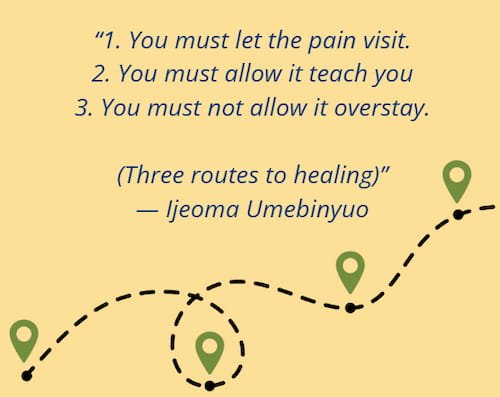
From psychologist Dr. Carol Dweck: Enjoy effort. If parents want to give their children a gift, the best thing they can do is to teach their children to love challenges, be intrigued by mistakes, seek new strategies, enjoy effort, and keep on learning. That way, their children don’t have to be slaves of praise. They will have a lifelong way to build and repair their confidence.
Notice what happens, try things, and learn. If you learn something, you are not moving backwards. You are not an anxious person; you may have anxious tendencies sometimes. By connecting to and exploring the breath in your body, you can discover tools to manage and reduce your anxiety tendency. Slow intentional breathing helps.
Anxious feelings typically share an anxious breathing pattern.
According to the February 2023 paper, Breathwork Interventions for Adults with Clinically Diagnosed Anxiety Disorders: A Scoping Review, Dysfunctional breathing is a hallmark of anxiety disorders; however, mainstays of treatments do not tackle breathing in patients suffering anxiety. A range of breathwork interventions yielded significant improvements in anxiety symptoms in patients clinically diagnosed with anxiety disorders.
Be Kind to yourself – your body is trying to help
Please don’t get upset that your breathing pattern may not be optimal when you’re feeling anxious. Your body is trying to help, it unintentionally got stuck in an unhelpful pattern. Yet overtime this can shift. And sometimes it’s hard to tell the difference between excitement, nervousness, and anxiety.
Experiment – Could you slow your breath down?
The wonderful aspect about connecting to and using your breath when you notice an anxious tendency, is you always have what you need with you wherever you are. Your breath and body are there to help you slow down, settle into the body, notice what’s happening, and orient yourself. When you notice you’re feeling anxious, try slowing your breath down and pausing for 1-5 seconds after every other exhale, before you inhale slowly again. If you can slow your breath down for one breath – this is a huge step. If it feels okay, repeat for 5-20 breaths. Please know you can breathe whenever you need.
If you can’t slow your breath down – move your body. Shake, wiggle, jump. And then when it feels more doable, see if you can slow your movements down and slow your breath down.
Ready for more experiments?
You could also start exploring the sensations you have in your body as you breathe. Can you position yourself so that you can feel the wave of your breath, starting in your mid back and working it’s way all the way through the chest and torso? Through relaxation and contraction techniques, self-massage, and awareness can you create more space for your breath and release some tension and interrupt the anxiety cycle? If attempting this causes you anxiety, start simply and try to connect to your feet and push into your feet as you stand and breathe slowly.
Everyone is unique, Nicole would be happy to work with you to develop some tools that would work for you. You can also join her for the Breathe to Unwind Anxiety course.
Check out the current breathwork offerings to increase your understanding of yourself and interrupt anxiety.